- Explore Kelimutu’s three distinct, color-shifting crater lakes.
- Discover UNESCO-recognized Wae Rebo village with its unique conical houses.
- Witness megalithic traditions in Ngada’s Bena and Luba villages.
The scent of volcanic earth rises, carried by a warm breeze across the Flores Sea. This is Flores, an island in East Nusa Tenggara, Indonesia, where ancient traditions persist against a backdrop of dramatic landscapes and vibrant marine life. A comprehensive Flores Island tour offers a journey through diverse ecosystems and cultures, from its western gateway in Labuan Bajo to the sacred rituals of Larantuka in the east.
The Western Gateway: Labuan Bajo and Komodo Extensions
Labuan Bajo, located on Flores’ western tip, serves as the primary entry point for any Flores Island tour. Komodo Airport (LBJ) welcomes flights from Jakarta, Bali, and Makassar, making it easily accessible. The town, once a quiet fishing village, transformed significantly after 2018, when it hosted a G20 Sherpa Meeting, leading to infrastructure upgrades including a modern port and improved roads. Today, Labuan Bajo functions as the central hub for explorations into Komodo National Park, a UNESCO World Heritage site since 1991, primarily focusing on the Komodo dragon. Most visitors arrive here to experience the iconic dragons on Rinca and Komodo islands, often extending their stay for a Flores Island tour to delve deeper into the mainland’s offerings. The town’s population sits around 60,000, with a diverse mix of Manggarai people, Bugis, and other Indonesian ethnic groups. Waterfront restaurants line the bay, offering fresh seafood caught by local fishermen. From Labuan Bajo, access to other Flores destinations like Ruteng, Bajawa, and Ende begins with overland travel, often via private car or local bus services. The drive to Ruteng, the capital of Manggarai Regency, takes approximately 3-4 hours, covering a distance of 130 kilometers through rolling hills and rice paddies. For travelers seeking a dedicated Komodo experience, dedicated Komodo National Park tours depart daily from Labuan Bajo’s harbor.
Kelimutu’s Chromatic Lakes and Ende’s Historical Echoes
Central Flores unfolds with Kelimutu National Park, home to the three iconic crater lakes, a highlight of any comprehensive Flores Island tour. Located near Moni village, these lakes reside within the caldera of Mount Kelimutu, an active volcano rising to 1,639 meters above sea level. The lakes possess distinct names: Tiwu Ata Bupu (Lake of Old People), Tiwu Ko’o Fai Nuwa Muri (Lake of Young Men and Maidens), and Tiwu Ata Polo (Enchanted Lake). What distinguishes Kelimutu is the unpredictable shifts in their water colors, attributed to varying mineral content and gas activity, including sulfur and iron. Documented color changes have occurred since at least 1914, with hues ranging from turquoise to red, brown, and even black. Visitors typically arrive before dawn to witness the sunrise illuminate the lakes, a spectacle best observed from the viewing platform constructed in 1968. The journey from Ende, the nearest major town, to Moni takes approximately 2 hours, covering a distance of 50 kilometers. Ende itself holds significant historical importance as the place where Indonesia’s first president, Sukarno, was exiled by the Dutch colonial government from 1934 to 1938. His humble house, now a museum, stands as a testament to his formative years and the drafting of the Pancasila, Indonesia’s state philosophy. The town also serves as a gateway to the Lio cultural heartland, known for its distinct ikat weaving traditions. For a detailed exploration, consider a Kelimutu lakes guide to understand the best viewing times and local customs.
Bajawa Highlands: Ngada Culture and Volcanic Landscapes
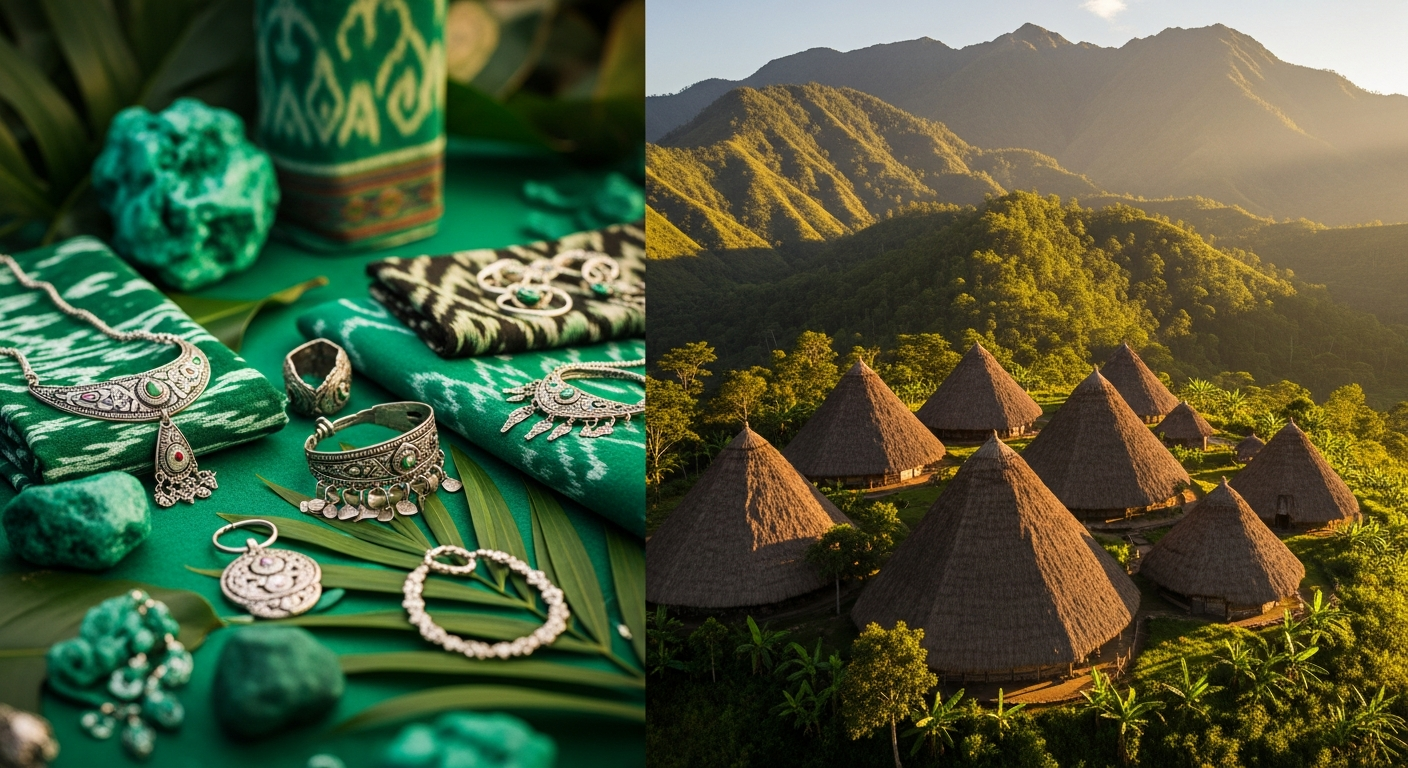
Moving eastward on a Flores Island tour leads into the Ngada highlands, centered around the town of Bajawa. This region is renowned for its well-preserved megalithic villages and the unique culture of the Ngada people. Bena, arguably the most prominent traditional village, features two rows of ancestral houses facing each other, with megalithic stones, ngadu (male ancestral shrines), and bhaga (female ancestral shrines) arranged in the central courtyard. Approximately 45 traditional houses, often with thatched roofs, comprise Bena, which has been inhabited for over 1,000 years. Nearby Luba village offers a similar architectural style but on a smaller scale. These villages are not museums; they are living communities where daily life, including farming and traditional crafts, continues. The Ngada are also celebrated for their intricate ikat textile weaving, a labor-intensive process where threads are resist-dyed before weaving, resulting in complex geometric patterns and symbolic motifs. A single Ngada ikat cloth can take weeks to months to complete, depending on its size and complexity. The region is also home to Mount Inerie, an active stratovolcano reaching 2,245 meters, whose conical peak dominates the skyline. Another viewpoint, Wolobobo, offers panoramic vistas of the surrounding valleys and volcanoes, including Inerie and Ebulobo. The traditional Manggarai Caci stick fight, a ritualistic duel performed by men using rattan shields and whips, is a powerful cultural display, typically occurring during harvest festivals or important ceremonies, symbolizing bravery and community spirit. Bajawa cultural tours provide access to these authentic experiences, often including interactions with local villagers.
Wae Rebo: A UNESCO Village Pilgrimage
Deep within the mountainous interior of Manggarai, a Flores Island tour can include a pilgrimage to Wae Rebo, a traditional village recognized by UNESCO. This remote village is celebrated for its seven iconic Mbaru Niang, conical, communal houses with tall, sweeping thatched roofs. Located at an elevation of approximately 1,200 meters above sea level, Wae Rebo is accessible only via a challenging trek. The hike typically takes 3 to 4 hours from Denge village, covering a distance of about 7 kilometers through dense rainforest and past coffee plantations. The journey itself is an experience, offering glimpses of endemic flora and fauna. Upon arrival, visitors undergo a traditional welcoming ceremony called Wae Lu’u, performed by the village elders, which seeks permission from the ancestors for the guests’ presence. This ritual is a respectful and essential part of visiting Wae Rebo. Each Mbaru Niang stands five stories high, each level serving a specific purpose, from communal living spaces on the ground floor to storage for crops and ancestral relics in the upper levels. The community of approximately 1,200 people sustains itself primarily through coffee farming, cultivating Arabica beans that thrive in the highland climate. Wae Rebo received the UNESCO Asia-Pacific Awards for Cultural Heritage Conservation in 2012, recognizing the community’s efforts in preserving their unique architectural and cultural heritage. Staying overnight in one of the Mbaru Niang offers a profound insight into the communal lifestyle and allows for stargazing away from light pollution. For those planning this journey, specific Wae Rebo trekking guides are available to ensure a respectful and safe visit. (Source: UNESCO World Heritage Centre, referencing similar cultural heritage preservation projects).
Riung 17 Islands Marine Park: Coastal Serenity
On Flores’ northern coast, the Riung 17 Islands Marine Park presents a different facet of a Flores Island tour, focusing on marine biodiversity and tranquil island escapes. Despite its name, the park comprises more than 17 islands, islets, and atolls, stretching over 30 kilometers of coastline. These include larger islands like Ontoloe and Rutong, alongside numerous smaller, uninhabited landmasses. The park, officially designated as a marine protected area, covers approximately 17,000 hectares. It is a sanctuary for diverse marine life, featuring vibrant coral reefs, schools of tropical fish, and sea turtles. Snorkeling and diving are popular activities, offering encounters with clownfish, parrotfish, and occasional reef sharks. One of the park’s most captivating phenomena is the massive colony of flying foxes (fruit bats) that roost in the mangrove forests of Ontoloe Island. As dusk approaches, thousands of these bats emerge, creating a dramatic aerial display as they fly towards the mainland in search of fruit. Boat trips around the park typically include stops for snorkeling, beach picnics on white sandy shores, and observation of the flying foxes. The nearest town, Riung, is a quiet fishing community, offering basic accommodations and local eateries. Conservation efforts within the park focus on protecting its fragile coral ecosystems and maintaining the habitats of its diverse marine and avian populations. The journey to Riung from Bajawa takes approximately 3-4 hours by car, covering a distance of 75 kilometers through winding roads and scenic vistas. This marine park offers a peaceful contrast to the island’s volcanic and cultural highland experiences.
Eastern Flores: Larantuka’s Faith and Maumere’s Charms
The eastern reaches of Flores reveal a distinct cultural and religious landscape, particularly in Larantuka and Maumere. Larantuka, often called the “Vatican of Indonesia,” is famous for its deeply rooted Catholic traditions, especially the Semana Santa (Holy Week) procession. This annual event, dating back to the 16th century with Portuguese colonial influence, draws thousands of pilgrims. The procession involves carrying statues of Jesus and Mary through the town, often by boat, symbolizing a profound spiritual journey. The devotion and elaborate rituals during Semana Santa showcase a unique blend of indigenous culture and European Catholicism, making it a significant cultural attraction. Maumere, as the largest town in eastern Flores, serves as another major entry point with Frans Seda Airport (MOF) connecting to Bali and other Indonesian cities. The region around Maumere is known for its beautiful beaches, such as Koka Beach, and its excellent diving opportunities, particularly in the waters of Maumere Bay, which recovered remarkably after the 1992 earthquake and tsunami. The Sikka people, indigenous to this area, are renowned for their distinct ikat weaving, characterized by rich indigo dyes and intricate patterns that often depict marine life or ancestral motifs. The weaving process can take months, with some elaborate pieces requiring over a year to complete. Maumere also provides access to smaller, traditional villages like Watublapi, where visitors observe the weaving process firsthand and engage with local artisans. The blend of spiritual heritage, coastal charm, and traditional crafts makes eastern Flores an essential segment of a comprehensive Flores Island tour, offering a glimpse into the island’s enduring cultural resilience and natural beauty. (Source: Indonesia Travel).
Planning Your Definitive Flores Island Tour: Logistics and Authority
Planning a definitive Flores Island tour demands consideration for logistics, local regulations, and sustainable practices. The island measures approximately 360 kilometers from west to east, requiring at least 7-10 days for a thorough exploration, excluding Komodo National Park. Most tours originate from Labuan Bajo, offering options for private car hire with a driver, which provides flexibility, or joining small group tours. Reputable local operators ensure adherence to safety standards and provide knowledgeable guides, many of whom hold certified local guiding licenses issued by the Indonesian Ministry of Tourism. When selecting a tour, verify that operators prioritize responsible tourism, supporting local communities directly and minimizing environmental impact. This includes adherence to waste management protocols and respect for cultural sites. Accommodations range from luxury resorts in Labuan Bajo to comfortable guesthouses in Moni and Bajawa, and even homestays in traditional villages like Wae Rebo, offering a deeper cultural exchange. Booking flights to Komodo Airport (LBJ) for western Flores or Frans Seda Airport (MOF) for eastern Flores dictates your starting point. Travel during the dry season, from April to October, generally offers the most favorable weather conditions for trekking and island hopping, with average temperatures around 28-32 degrees Celsius. During peak season (July-August), advance booking for flights and accommodations is advisable. Understanding local customs, such as appropriate dress when visiting sacred sites and the importance of greetings, enhances the travel experience. A truly comprehensive Flores Island tour integrates adventure with cultural sensitivity, creating connections that extend beyond mere sightseeing. (Source: Wikipedia – Flores).
From the Komodo dragons to the shifting hues of Kelimutu’s lakes, and from the ancient rites of Ngada villages to the serene marine parks, a journey through Flores Island reveals Indonesia at its most authentic. Discover the depth of its cultures and the expanse of its natural wonders. For detailed itineraries and expert guidance on crafting your ideal Flores Island tour, explore the options available at floresislandtour.com.