The optimal period for a Flores Island tour extends from May through October, aligning with the dry season. This window offers clear skies, calm seas for Komodo exploration, and favorable road conditions across the island’s diverse landscapes. Expect minimal rainfall and consistent sunshine for trekking to Kelimutu’s vibrant lakes and exploring traditional villages.
- **May-October:** Ideal for diving, Komodo boat trips, and overland travel.
- **November-April:** Characterized by monsoon rains, leading to lush scenery and fewer visitors.
- **Shoulder Months (April, November):** Present a balance of good weather and reduced crowds.
Flores reveals itself under specific seasonal cadences, each influencing the rhythms of travel. Understanding these patterns allows for a more attuned Flores Island tour, moving beyond simple weather forecasts to grasp the island’s true pulse.
The Dry Season Advantage: May to October on Flores
From May through October, Flores experiences its dry season, presenting the most consistent conditions for comprehensive island exploration. The skies remain predominantly clear, offering unobstructed views of volcanoes like Inerie and the ever-changing Kelimutu lakes. Average daytime temperatures range from 28 to 32 degrees Celsius, with humidity levels lower than the wet season. This period is particularly advantageous for marine activities around Labuan Bajo and Komodo National Park. Visibility for diving often exceeds 20 meters, revealing the vibrant coral gardens and abundant marine life that characterize the Savu Sea and the Flores Sea. Boat excursions to Rinca and Padar islands proceed with predictable ease, navigating calm waters.
Overland journeys across Flores become significantly more comfortable during these months. The Trans-Flores Highway, a vital artery stretching approximately 670 kilometers from Labuan Bajo to Larantuka, remains in optimal condition, minimizing travel delays. Treks to remote cultural sites, such as the UNESCO-recognized Wae Rebo village, are more accessible, as mountain trails are dry and less slippery. Wae Rebo, situated at an elevation of 1,200 meters, typically sees less fog in the dry season mornings, enhancing photographic opportunities of its distinctive Mbaru Niang conical houses. The Ngada highlands, home to traditional villages like Bena and Luba, also benefit from the drier climate, making walks through megalithic sites more pleasant. These villages, some dating back over 1,200 years, host ceremonies that are often scheduled during the dry season, coinciding with harvest periods and community gatherings. Securing accommodations and tour guides during this peak dry season often requires booking several months in advance, especially for popular Komodo boat trips and stays in Labuan Bajo.
Monsoon Rhythms: November to April and the Green Season Allure
The monsoon season, spanning from November to April, transforms Flores into a landscape of verdant greens and dramatic skies. While rain is a defining feature, it rarely persists throughout the entire day. Typically, showers occur in the late afternoon or evening, leaving mornings often clear and fresh. Average temperatures slightly decrease to 26-30 degrees Celsius, and humidity rises. This period, often referred to as the “green season,” offers a different kind of aesthetic, appealing to photographers seeking lush, vibrant scenery and dramatic cloud formations, particularly around the Kelimutu volcano, which stands at 1,639 meters. The vegetation around Bajawa and Ruteng flourishes, presenting a stark contrast to the drier, more arid landscapes of the peak dry season.
Travel during the monsoon requires flexibility. While most major routes remain open, some unpaved sections of roads, particularly those leading to more remote locations like specific hot springs or certain traditional villages, can become challenging or temporarily impassable due to heavy rainfall and potential landslides. Sea conditions for boat trips from Labuan Bajo to Komodo National Park can be choppier, and visibility for diving might be reduced. However, the monsoon also brings advantages: fewer tourists mean a more intimate experience at popular sites, and prices for accommodations and tours can be noticeably lower, sometimes by 15-20 percent. This creates an opportunity for budget-conscious travelers or those who prefer solitude. Cultural events, such as specific Caci stick fight demonstrations in Manggarai villages, occur throughout the year, but local conditions dictate exact timings. Checking local forecasts and consulting with local guides, like those available through Flores Island Tour, is crucial for planning during these months.
Labuan Bajo & Komodo: Navigating the Waters
Labuan Bajo, the western gateway to Flores, serves as the primary hub for exploring Komodo National Park, a UNESCO World Heritage Site established in 1991. The dry season, from May to October, offers optimal conditions for all marine activities. The waters around the park’s 1,733 square kilometers are typically calm, with excellent visibility for snorkeling and diving. Dive sites like Batu Bolong and Manta Point are at their peak, attracting divers worldwide to witness the abundant pelagic life, including manta rays with wingspans up to 7 meters. Boat trips to see the Komodo dragons on Rinca and Komodo islands are consistently smooth, and the treks on these islands are manageable under the dry, sunny skies. The warm water temperatures, averaging 27-30 degrees Celsius, make prolonged aquatic exploration comfortable.
During the monsoon season, from November to April, the dynamics shift. While Komodo National Park remains open, sea conditions can be more unpredictable. Winds pick up, and waves can reach 1-2 meters, potentially causing discomfort on smaller boats. Some operators may cancel or reschedule trips during periods of particularly heavy weather. Diving visibility might decrease due to runoff from the land, though many sites still offer rewarding experiences, especially in sheltered bays. The landscape within the park turns vibrant green, a striking contrast to the golden savannas of the dry season, offering unique photographic perspectives of the Komodo dragons against a lush backdrop. For those traveling in the monsoon, booking a larger, more stable boat for Komodo excursions is advisable, and maintaining flexibility in the itinerary is key. Wildlife spotting, including the Komodo dragons, is possible year-round, as their activity is less dependent on seasonal weather changes than on their feeding cycles. Reputable operators prioritize safety, and local expertise is paramount in navigating seasonal variations for your Komodo adventure.
Highlands and Lakes: Kelimutu, Bajawa, Wae Rebo
The central highlands of Flores, encompassing Kelimutu, Bajawa, and the path to Wae Rebo, present distinct seasonal considerations. Kelimutu, known for its three crater lakes that famously change color, offers the clearest views during the dry season (May to October). Ascending to the viewpoint before sunrise to witness the lakes—Tiwu Ata Mbupu (Lake of Old People), Tiwu Nuwa Muri Koo Fai (Lake of Young Men and Maidens), and Tiwu Ata Polo (Enchanted Lake)—is a popular activity. During these months, the chances of encountering fog or heavy cloud cover are significantly reduced, allowing for unobstructed panoramas. The trek up to the crater rim, a relatively easy 30-minute walk from the parking area, is firm and dry.
Access to Wae Rebo, the traditional Manggarai village recognized for its unique architecture and cultural preservation, is also more straightforward in the dry season. The 3-4 hour trek through dense rainforest from Denge village is less muddy and slippery. Wae Rebo’s seven Mbaru Niang houses, each standing several stories high, are best appreciated when the trail is safe and the village is not shrouded in persistent mist. Bajawa, nestled in the Ngada highlands, is surrounded by active volcanoes like Inerie (2,245 meters) and offers access to traditional villages such as Bena and Luba, where ancient megalithic structures and animist traditions persist. During the dry season, exploring these sites and hiking to nearby hot springs like Malanage is more comfortable. The monsoon season (November to April) brings a different atmosphere. While the lakes at Kelimutu can still be viewed, fog and rain are more common, potentially obscuring parts of the landscape. The trails to Wae Rebo become challenging, requiring sturdy footwear and caution. However, the monsoon cloaks the highlands in an intense green, and the cooler temperatures can be a welcome relief for some. Local festivals and ceremonies in the Ngada region often coincide with agricultural cycles, some of which fall within the monsoon, offering unique cultural insights for those prepared for the weather.
Eastern Flores: Riung, Larantuka, and Coastal Explorations
Eastern Flores, with its distinct cultural practices and marine parks, also responds to the island’s seasonal rhythms. Riung 17 Islands Marine Park, located on the north coast, is best visited during the dry season (May to October). This protected area encompasses 17 islands and islets, offering pristine snorkeling, diving, and island-hopping experiences. The calm waters facilitate boat trips to witness flying fox colonies, explore white-sand beaches, and discover vibrant coral reefs teeming with species like clownfish and parrotfish. Visibility in the marine park’s 17,000 hectares is excellent, making it an ideal time for underwater photography and exploration. The coastal roads leading to Riung from Bajawa or Ende are generally well-maintained during the dry months, ensuring smoother travel.
Further east, Larantuka, the capital of East Flores, is renowned for its unique Catholic traditions, particularly the Semana Santa procession. This annual event, which occurs on Good Friday, draws thousands of pilgrims and spectators. While the procession’s date is fixed by the Christian calendar, it often falls within the early part of the monsoon season (March or April). Travelers planning to experience Semana Santa should be prepared for potential rain and higher humidity. The coastal drive along the eastern stretch of Flores, offering views of the Savu Sea and the volcanic peaks, is generally manageable year-round, but heavy monsoon rains can occasionally cause minor delays or make unpaved sections more challenging. Exploring the traditional ikat weaving villages around Maumere, the largest city in eastern Flores, is an activity that can be enjoyed in any season, as the weaving process is primarily indoors. However, market days and community gatherings, often a highlight of cultural visits, may be more vibrant and accessible during the drier periods. For details on specific festivals, Indonesia.travel offers a broader overview of regional events.
Local Festivals & Cultural Windows: Beyond the Calendar
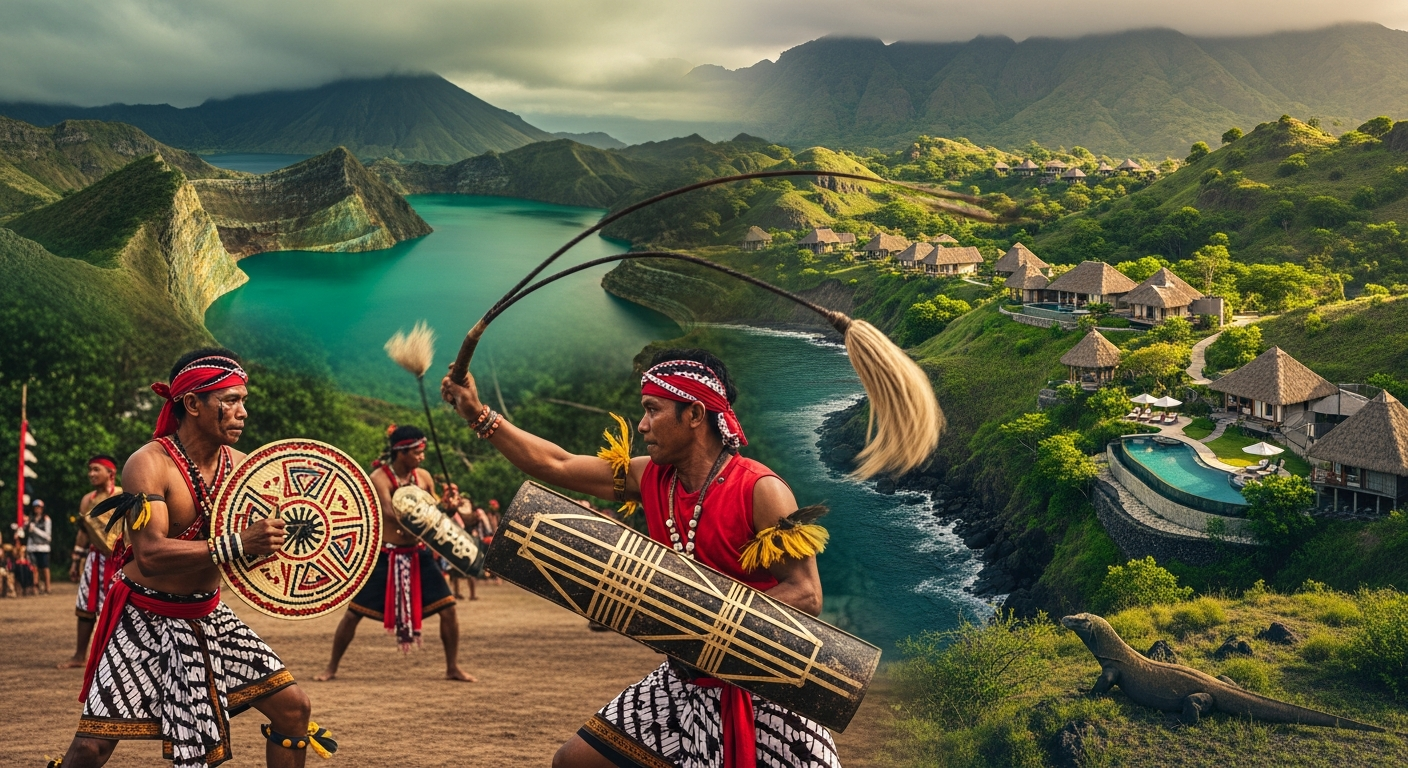
Beyond the meteorological calendar, Flores offers a dynamic calendar of cultural events and festivals, providing unique windows into the island’s diverse traditions. These events, often tied to agricultural cycles, ancestral rites, or religious observances, can occur in any season, adding another layer of consideration for your Flores Island tour. The Caci stick fight, a ritual whip fight originating from the Manggarai people, is one such powerful cultural expression. While Caci fights are sometimes staged for tourists, authentic ceremonies often take place during harvest festivals (like Penti) or important community gatherings, which can occur during both dry and wet seasons. Witnessing a genuine Caci performance, with its intricate dance, singing, and drumming, offers a profound insight into Manggarai identity.
In the Ngada highlands around Bajawa, traditional villages like Bena and Luba host ceremonies that honor ancestors and ensure bountiful harvests. These events, often involving animal sacrifices and elaborate rituals around megalithic shrines, are deeply significant to the local community. Their timing can be fluid, determined by local elders and the lunar calendar. Travelers with a keen interest in cultural immersion should research specific village calendars or inquire with local guides well in advance. Larantuka’s Semana Santa, as mentioned, is a fixed date but falls within the monsoon. Other regional events include various harvest festivals (e.g., Keti in Ende, Reba in Ngada), which celebrate the staple crops like rice and corn. These celebrations are vibrant with traditional music, dance, and communal feasting. While the dry season might offer easier travel to these remote locations, the green season can bring a unique intimacy to these community events, with fewer outside visitors. Consulting local tour operators or community leaders for precise dates and accessibility is the best approach to aligning your visit with these enriching cultural experiences. For more on indigenous cultures, Wikipedia provides a general overview of Flores’s ethnography.
Crafting Your Flores Journey: Insider Considerations
Planning a Flores Island tour requires more than just understanding the weather; it demands an appreciation for local nuances and a degree of flexibility. The island’s infrastructure continues to develop, with significant upgrades to the Trans-Flores Highway improving connectivity between key destinations like Labuan Bajo, Ruteng, Bajawa, Ende, and Maumere. However, travel times can still be substantial, with the journey from Labuan Bajo to Ende often taking 10-12 hours for approximately 400 kilometers due to winding roads and mountainous terrain. Internal flights between cities like Labuan Bajo and Ende or Maumere offer quicker transit for those with limited time, with typical flight durations around 45 minutes.
Regardless of the season, engaging with local guides and tour operators provides invaluable insights. They possess up-to-the-minute knowledge of road conditions, local events, and the subtle shifts in weather patterns that might not be apparent from a general forecast. For example, even during the dry season, specific mountain passes can experience localized rain, or a sudden change in sea conditions might affect boat departures. Booking accommodations and popular tours, particularly for Komodo National Park, well in advance is always recommended, especially during the peak dry season from July to September. This ensures availability and often better pricing. Consider traveling in the shoulder months of April, May, October, or November for a balance of good weather and fewer crowds. These periods often present a compelling mix of accessibility, pleasant conditions, and a more relaxed atmosphere across Flores. Ultimately, Flores rewards the prepared and the adaptable, offering profound experiences irrespective of the calendar month.