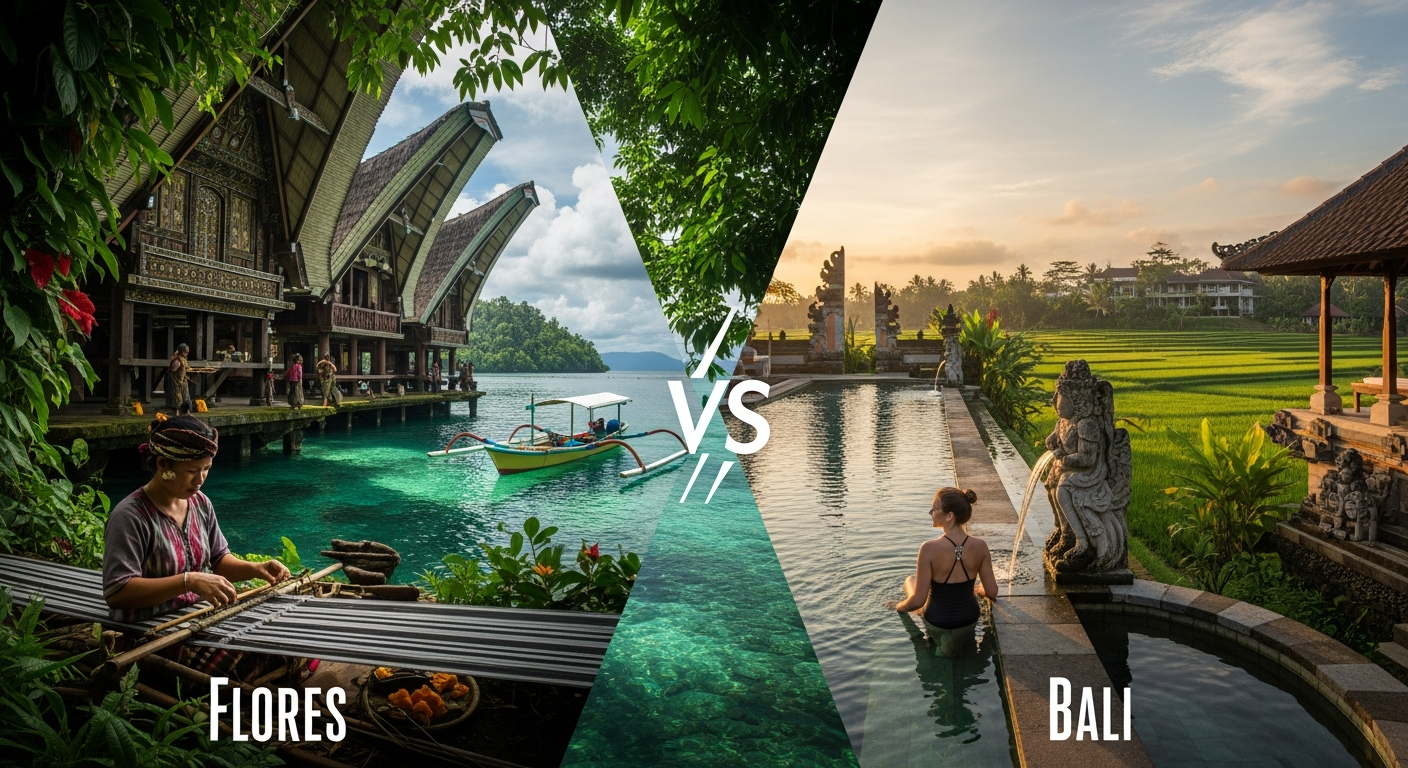
The morning sun casts long shadows over volcanic peaks, revealing a landscape etched with ancient traditions. Here, the scent of woodsmoke mingles with blooming frangipani, a distinct aroma that separates Flores from its more celebrated Indonesian counterparts. This is not the familiar rhythm of Bali’s rice paddies or the Gili Islands’ beach beats; this is Flores, an island demanding discovery, an experience often considered after a visit to the Komodo dragons. The choice extends beyond merely witnessing the world’s largest lizards; it presents a decision between a fleeting encounter and a profound journey.
Beyond the Dragons: Flores Island Tour vs. Komodo National Park (Standalone)
Travelers often arrive in Labuan Bajo, Flores’s western gateway, primarily for the Komodo National Park. This UNESCO World Heritage site, established in 1980, spans over 1,733 square kilometers, protecting the Komodo dragon (Varanus komodoensis) across islands like Komodo, Rinca, and Padar. A typical Komodo-only trip involves boat excursions, hiking to view dragons, snorkeling at Pink Beach, and perhaps a visit to Manta Point. This adventure, while exhilarating, typically lasts 2-3 days and focuses almost exclusively on wildlife and marine activities. The experience is intense, centered on the unique biodiversity of the region.
A comprehensive Flores Island tour, however, expands this narrative significantly. It begins where the Komodo trip concludes, delving into the island’s interior. From Labuan Bajo, the journey east introduces travelers to the Manggarai culture. The Caci stick fight, a ritualistic whip-fighting dance, remains a vibrant tradition, often performed during harvest festivals or important ceremonies. Driving inland, the landscapes transform from coastal drylands to fertile highlands, home to Ruteng and its spiderweb rice fields, a unique agricultural sight visible from above. Further east, the village of Wae Rebo, a UNESCO World Heritage tentative list site, offers an unparalleled cultural immersion. Reaching Wae Rebo requires a challenging 3-4 hour trek through dense forest, ascending to an altitude of approximately 1,200 meters. The village consists of seven traditional Mbaru Niang, conical houses reaching 15 meters in height, where visitors are welcomed with traditional coffee and shared meals. This journey offers a profound connection to the local community, a stark contrast to the observational nature of a Komodo dragon encounter.
The Flores tour continues to Bajawa, the heart of the Ngada highlands, where ancient megalithic villages like Bena and Luba stand as testament to ancestral reverence. Bena village, for instance, features impressive stone altars and traditional thatched-roof houses surrounding a central ceremonial ground. These villages are still inhabited, offering a living museum of Ngada culture, including the intricate process of Ngada ikat textile weaving, a craft passed down through generations. This level of cultural engagement, the opportunity to witness and participate in daily life, is absent from a Komodo-only itinerary. The average duration for a comprehensive Flores Island tour, extending from Labuan Bajo to Ende or Maumere, typically spans 5-7 days, allowing for a deeper understanding of the island’s diverse ethnic groups and their enduring traditions. A Wae Rebo trekking guide is available for those planning this specific adventure.
Volcanic Peaks and Ancient Rhythms: Flores Island Tour vs. Bali
Bali, often dubbed the “Island of the Gods,” draws millions annually with its Hindu temples, verdant rice terraces, and vibrant arts scene. Its tourism infrastructure is highly developed, offering luxury resorts, world-class dining, and a plethora of wellness retreats. Cultural experiences in Bali often involve temple visits like Tanah Lot or Ulun Danu Beratan, watching Kecak dance performances, or exploring artisan villages in Ubud. The island offers a polished, accessible version of Indonesian culture, blending spirituality with modern comforts. Its capital, Denpasar, serves as a major international hub, making arrival straightforward.
Flores presents a different proposition. While Bali’s culture is largely Hindu, Flores is predominantly Catholic, a legacy of 16th-century Portuguese influence, particularly evident in the annual Semana Santa procession in Larantuka. This religious diversity offers a distinct cultural lens. The island’s landscapes are rugged, dramatic, and less manicured than Bali’s. The journey across Flores is an expedition, traversing winding mountain roads that connect remote communities. Kelimutu National Park, near Ende, epitomizes Flores’s raw natural beauty. Here, three crater lakes, each with a distinct and often changing color (typically turquoise, brown, and black), offer a surreal spectacle at sunrise. The colors, believed to be influenced by volcanic gas activity and mineral composition, are a geological marvel, unlike anything found in Bali. Visitors often arrive before dawn to witness the first light illuminate the lakes, a journey that involves an early start and a walk of about 1.5 kilometers from the parking area to the viewpoint.
The cultural encounters on Flores feel more intimate and less commercialized. In Bajawa, observing the daily life within Bena village, where traditional houses are adorned with ancestor shrines and buffalo horns, feels like stepping back in time. The opportunity to purchase Ngada ikat textiles directly from the weavers, observing their intricate loom work, provides a direct connection to the craft. While Bali offers a broader range of amenities and a more established tourist trail, Flores appeals to those seeking authenticity, a deeper engagement with local communities, and the thrill of discovering landscapes largely untouched by mass tourism. The relative lack of luxury resorts means accommodation often consists of charming guesthouses or eco-lodges, offering a more rustic yet equally rewarding stay. Explore more about these unique geological features on our Kelimutu Lakes guide.
Untamed Shores and Spiritual Journeys: Flores Island Tour vs. Lombok & Gili Islands
Lombok and its satellite Gili Islands (Trawangan, Meno, Air) are renowned for their pristine beaches, world-class surfing, and vibrant underwater life. Lombok offers the formidable challenge of trekking Mount Rinjani, Indonesia’s second-highest volcano at 3,726 meters, an expedition that typically spans 2-4 days. The island also features waterfalls like Sendang Gile and Tiu Kelep, and the cultural insights of Sasak villages. The Gili Islands, meanwhile, are car-free havens known for diving, snorkeling, and a relaxed, party-friendly atmosphere. The focus here is largely on coastal relaxation and outdoor adventure, with a strong emphasis on marine activities.
Flores, while also boasting beautiful coastlines, offers a different kind of marine and cultural experience. The Riung 17 Islands Marine Park, located on Flores’s northern coast, presents a collection of over 20 islands and islets, despite its name. This protected area is a haven for snorkeling and observing flying foxes, which migrate in large numbers at dusk, creating a spectacular natural display. The marine biodiversity here is rich, but the overall experience leans towards serene exploration rather than bustling beach resorts. The journey to Riung often involves traversing less-traveled roads, adding to the sense of adventure.
Culturally, Flores offers a spiritual depth distinct from Lombok’s Sasak traditions. The annual Semana Santa in Larantuka, an ancient Catholic procession dating back to the 16th century, draws pilgrims from across Indonesia and beyond. This solemn event, centered around the veneration of the Tuan Ma (Blessed Mother) and Tuan Ana (Blessed Lord), offers a profound insight into the island’s unique religious heritage. The procession involves boats carrying statues across the harbor and candlelight vigils, a powerful cultural spectacle. While Lombok provides excellent opportunities for physical adventure and beach leisure, Flores delivers a more layered experience, combining dramatic natural wonders like the three-colored Kelimutu lakes with deep cultural and spiritual engagements. The rugged terrain and diverse ethnic groups (Manggarai, Ngada, Lio) offer a complexity that distinguishes it from the more straightforward beach and volcano offerings of Lombok. For those interested in the island’s unique spiritual heritage, our Indonesia.travel Larantuka page offers further details.
Island of Horsemen and Handwoven Stories: Flores Island Tour vs. Sumba
Sumba, located south of Flores in East Nusa Tenggara, is often considered a wilder, less-developed counterpart. It is famous for its distinct horse culture, particularly the Pasola festival, a ritualistic mock battle between two groups of horsemen, held annually in February or March. Sumba’s landscape is characterized by rolling hills, dry savannahs, and pristine beaches, with traditional villages featuring massive megalithic tombs. The island offers a glimpse into an animist culture, where ancestral spirits play a central role in daily life. Tourism infrastructure on Sumba is minimal compared to Flores, attracting a niche segment of travelers seeking extreme off-the-beaten-path experiences.
Flores, while also retaining strong traditional elements, offers a more diverse and accessible range of experiences. The island’s topography is more varied, from the arid western plains to the lush central highlands and volcanic eastern regions. This geographical diversity translates into a broader array of cultural groups and natural attractions. While Sumba has its megalithic tombs, Flores boasts living megalithic villages like Bena, where daily life unfolds amidst ancient stone structures. The traditional ikat weaving of Flores, particularly from the Ngada and Lio regions, is intricate and regionally distinct, often incorporating motifs reflecting local beliefs and natural surroundings. The UNESCO tentative listing for Wae Rebo underscores Flores’s recognition for its cultural heritage.
Accessibility is another key differentiator. Labuan Bajo, on Flores, serves as a major hub with direct flights from Jakarta and Bali, facilitating easier access for international travelers. While Sumba also has airports, the frequency and directness of flights are typically lower. Flores offers a more established, albeit still adventurous, tourist route that allows for comfortable travel between major cultural and natural sites. The presence of the three-colored Kelimutu lakes, a geological phenomenon unique to Flores, provides a natural wonder that Sumba does not replicate. For travelers seeking a balance between raw cultural immersion and manageable adventure, Flores presents a more varied and slightly more developed option than the truly frontier experience of Sumba. Both islands offer deep cultural insights, but Flores provides a wider spectrum of experiences and a somewhat smoother travel experience without sacrificing authenticity.
The Verdict: Tailoring Your East Nusa Tenggara Expedition
Choosing your Indonesian adventure involves weighing desires for wildlife, cultural depth, natural beauty, and accessibility. A standalone Komodo National Park trip delivers an unparalleled encounter with the dragons and vibrant marine life, typically confined to a few intense days. It is a spectacular wildlife focused journey. Bali offers a polished, culturally rich, and highly developed experience, perfect for those seeking comfort alongside spiritual exploration and diverse entertainment. Lombok and the Gili Islands cater to beach lovers, trekkers, and those seeking vibrant nightlife or serene coastal relaxation, with Mount Rinjani as a significant draw for adventurers.
Sumba calls to the most intrepid traveler, promising an unvarnished glimpse into ancient animist traditions, horse culture, and truly remote landscapes. Its appeal lies in its rawness and minimal tourism footprint. However, a Flores Island tour presents a compelling middle ground, or perhaps, an elevated alternative. It begins with the Komodo experience, but then expands dramatically into a journey of profound cultural immersion, geological wonder, and authentic encounters. From the ancestral villages of Ngada and the unique Mbaru Niang of Wae Rebo to the mesmerizing Kelimutu lakes and the spiritual fervor of Larantuka’s Semana Santa, Flores offers a diverse and deeply rewarding expedition. It is for the traveler who seeks more than just a checklist of sights; it is for those who desire to connect with the land, its people, and its enduring traditions. The island’s infrastructure, while not as developed as Bali’s, is sufficient for a comfortable and adventurous exploration, making it the ideal choice for cultural travelers, photographers, and eco-tourists extending their Indonesian journey beyond the ordinary. Consider a comprehensive Flores exploration for a truly transformative adventure.